What Is a Solar Power Purchase Agreement (PPA)? A Simple Guide for Indian Businesses
Aug 24
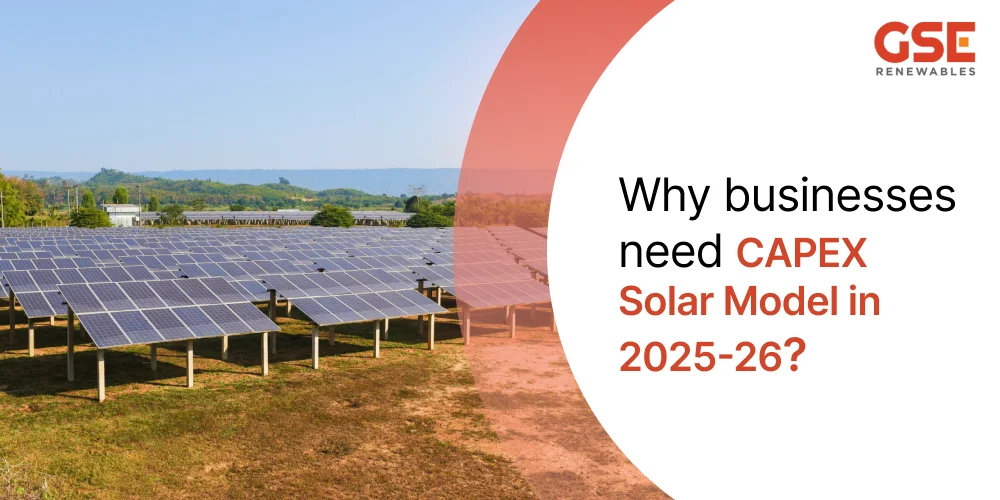
CAPEX solar power plant is normally an on-site solar facility, which can be rooftop solar or ground mounted solar mounted on the premise of a company to satisfy its own demand. This is a behind-the-meter installation, which supplies power directly to the factory, campus or office which it serves. On-site plants reduce transmission losses and protect critical loads, which guarantees continuous supply. They are suited to large users who have available land or roof space (e.g. manufacturing units, data centers, hospitals) and want to achieve as much energy autonomy as possible and instant payback on the avoided grid purchases.
Captive solar is constructed in an isolated location, and the energy is transported to the customer using the utility grid under open-access conditions. Regulatory favors are also given to captive solar users in India such as cross-subsidy and other surcharges are not imposed on qualifying captive projects. The outcome is reduced unit cost of energy and reduced ROI. This model is applicable in firms that do not have space in their premises or those that have several locations.
A Captive Solar Project through a CAPEX Solar model offers several advantages. It ensures full ownership of the solar asset, enabling tax benefits such as accelerated depreciation and GST credits. By generating electricity off-site for the organization’s consumption, it provides long-term cost savings and greater energy independence.
At GSE Renewables, we follow a systematic, step-by-step approach to install captive solar power plants using the CAPEX solar model.
| Feature | CAPEX | OPEX / PPA | Loan/Lease Hybrid |
|---|---|---|---|
| Upfront Cost | High (100% CAPEX) | Zero | Moderate (30–80% CAPEX) |
| Ownership | Yes | No | Yes |
| Tax Incentives | AD, GST credit, RECs | Benefits accrue to the provider | Shared |
| Maintenance Responsibility | Company / EPC | Developer | Shared or contracted |
| Energy Tariff Cost | Lowest LCOE | 20–40% cheaper vs. grid | Between CAPEX & OPEX |
| Complexity | High (O&M, financing) | Low (PPA-based) | Moderate |
| Suitability | Companies with CAPEX & control | Businesses needing simplicity | Balance of cost and control |
| Installation Type | Capacity | CAPEX (Approx.) | Annual Savings | Payback Period | ROI Estimate |
|---|---|---|---|---|---|
| Rooftop Solar (Industrial) | 1 MW | ₹4–4.5 Cr | ₹65–80 Lakhs | 4–6 years | 20–25% |
| Ground-Mount Captive Plant | 2 MW | ₹8–9 Cr | ₹1.5–1.8 Cr | 4–5 years | 22–30% |
| Captive Open Access Plant | Varies | Shared investment | ₹30–90 Lakhs/user | 3–5 years | 20–28% |
The following are the main industries that typically utilize captive power plants:
Yes, captive solar power plants typically offer significant savings compared to purchasing electricity from the grid, especially in the long run.
A captive solar power plant generates solar energy for self-consumption within a business or industrial facility, reducing reliance on grid power.
A Captive Power Plant is designed for self-consumption, whereas an Independent Power Plant generates power for distribution to the grid or other users.
A captive solar plant serves a single business, while a group captive solar plant involves multiple businesses sharing a common solar installation.
The electricity generation depends on the system size, location, and sunlight availability, but it typically meets a significant portion of the energy needs of the business.
CapEx (Capital Expenditure) in solar is the upfront cost to buy and install a solar system. The buyer owns the system and benefits from long-term energy savings and tax incentives.
With CAPEX solar, the client owns and manages the solar system. A PPA (Power Purchase Agreement) involves a third-party provider handling installation, permissions, and maintenance, while the client pays for the electricity used.