What Is a Solar Power Purchase Agreement (PPA)? A Simple Guide for Indian Businesses
Aug 24
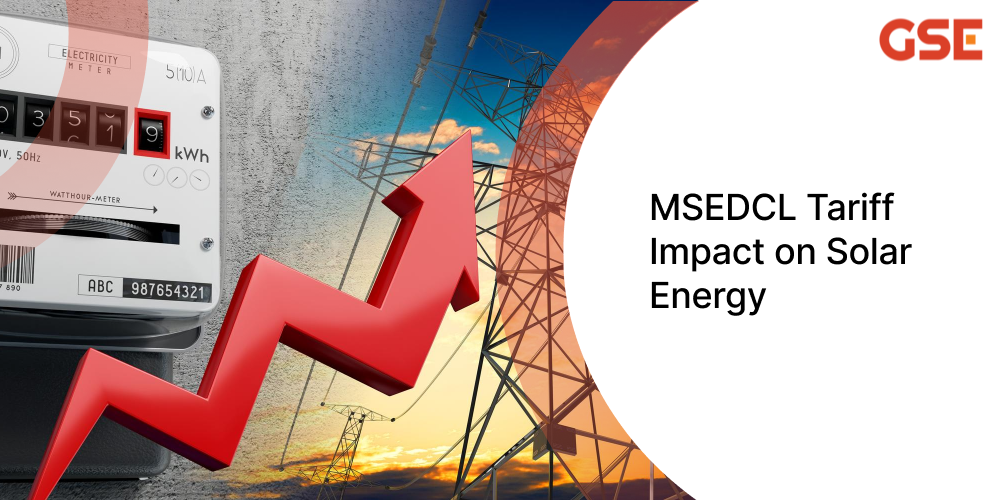
The Maharashtra State Electricity Distribution Company Limited (MSEDCL) has come up with suggested modifications of the Time-of-Day (ToD) tariff to the existing ToDs. These changes are causing apprehensions to present consumers of renewable energy power and those intending to install solar and other renewable energy power within the state. These changes are new and present financial, regulatory and investment challenges. The solar industry in Maharashtra, which is still emerging, will be impacted by the proposed changes as well. There has been a couple of years in commercial and industrial (C&I) segments that have been experiencing rising costs of energy. When we sum up lower solar incentives per unit, then the C&I segment will have to pay more in their energy bills in the future. This article discusses the concerns of C&I consumers and industry stakeholders, and explains how open access solar in Maharashtra is emerging as the most practical solution to beat rising MSEDCL tariff rates in 2025-26.
The MSEDCL tariff order for FY 2025-26 has now come into effect, and the impact on industrial and commercial consumers is more significant than many initially anticipated. Maharashtra Electricity Regulatory Commission (MERC) finalized the MSEDCL solar tariff 2025-26 structure with the following key realities for the C&I segment:
In simple terms: if your factory runs at any hour outside the 9 AM to 5 PM window, you are now paying materially more than before. This makes the case for open access solar in Maharashtra stronger than ever, and that is exactly what this guide addresses.
Proposed changes in Time-of-Day (ToD) tariff from current ToDs are shown in the table:
ToD zone | OLD | PROPOSED | |||
ToD timing slot | Current Rate (Rs.) | ToD timing slot | Rate (Rs.) | Industrial FY 2025-26 | Commercial FY 2025-26 |
A | 00:00-06:00 and 22:00-24:00 (N.OP rebate) | 1.5 | 22:00-06:00 (N.Pk) | 1 | 0.9 |
B | 06:00-09:00 and 12:00-18:00 (Pk) | 0 | 06:00-09:00 (M.Pk) | 1.15 | 1.25 |
C | 09:00-12:00 (M.Pk) | 0.8 | 09:00-17:00 (OP rebate) | -2.15 | -2.15 |
D | 18:00-22:00 (E.Pk) | 1.1 | 17:00-22:00 (Ev.Pk) | 1.3 | 1.4 |
The new MSEDCL tariff reduces solar benefits, resulting in:
The revised ToD tariff also affects industries and businesses, particularly those relying on open access solar energy as well as rooftop solar net metering systems.
The revised solar electricity tariff structure is leading to increased operational expenses for businesses, which will affect the profitability of the C&I segment. Discounts provided for daytime (9am to 5pm) will certainly help industries to save on power bills to a certain extent, but they will also have to shell out higher per-unit charges for night off-peak (10pm to 6am) ToD slots and other peak ToDs.
Owning solar or other renewable energy projects helps industries to reduce operational costs, as usually the cost of production of such energy is far less than the grid power. Additionally, the uncertainty around tariffs is causing hesitation from investors, slowing down interest in solar and renewable energy investments.
These proposed changes will also have an effect on developers of renewable energy who sell renewable energy through Power Purchase Agreements (PPAs). A lesser solar offset value per unit will make the PPAs unviable for renewable energy power buyers.
Slowing down demand for renewable energy power due to higher dependence on grid power may have consequences for India’s environmental goals.
Slower solar adoption is delaying clean energy goals, increasing emissions, depleting natural resources, and limiting installable capacity of renewable energy, hindering India’s renewable targets.
This is the question every plant manager and finance head is asking after the MSEDCL tariff 2025-26 revision. The answer depends on your connected load and shift patterns, but the numbers are consistently compelling. Open access solar Maharashtra projects procure power directly from utility-scale solar farms at contracted rates significantly lower than MSEDCL grid tariffs, bypassing peak hour surcharges entirely for the solar quantum consumed.
The table below shows estimated savings for different factory sizes based on current MSEDCL tariff 2025-26 rates and typical open access solar PPA rates of Rs. 4.5 to Rs. 5.5 per unit:
Factory Size | Monthly MSEDCL Bill (Approx.) | Est. Savings with Open Access Solar | Annual Saving Potential |
Small (250 kW) | Rs. 15 to 20 Lakh | 20 to 30% | Rs. 36 to 72 Lakh |
Medium (500 kW) | Rs. 30 to 45 Lakh | 25 to 35% | Rs. 90 to 1.8 Cr |
Large (1 MW+) | Rs. 60 to 90 Lakh+ | 30 to 40% | Rs. 2.2 to 4.3 Cr |
Note: Actual savings vary based on your existing tariff category (HT or LT), sanctioned load, consumption pattern, and applicable open access charges such as wheeling, transmission, and cross-subsidy surcharge (CSS). Contact GSE Renewables for a factory-specific calculation.
Businesses in other states have already demonstrated significant results through this model. If you want to understand how it works in a comparable regulatory environment, explore our open access solar solutions in Gujarat and open access solar solutions in Tamil Nadu, where GSE Renewables has delivered consistent savings for C&I buyers.
If you are still evaluating whether open access solar is worth it for your Maharashtra plant, this side-by-side comparison makes the decision clearer:
Parameter | Grid Power (MSEDCL) | Open Access Solar |
Cost per Unit (Peak Hour) | Rs. 8 to 12 | Rs. 4.5 to 6 |
Evening Peak Surcharge | Rs. 1.3/unit extra | Not Applicable |
Night Off-Peak Charges | Rs. 1.0/unit | Minimal |
Tariff Predictability | Variable (Revised Every Year) | Fixed PPA for 10 to 25 Years |
Carbon Footprint | High | Near Zero |
The long-term tariff certainty is perhaps the most underrated advantage. With MSEDCL revising tariffs annually and peak surcharges rising, locking in solar power at a fixed PPA rate for 15 to 25 years removes a critical variable from your cost structure. This is why more Maharashtra manufacturers are choosing open access solar Maharashtra over continued grid dependence.
Open access solar in Maharashtra is available to consumers connected at HT (High Tension) or EHT (Extra High Tension) voltage levels with a sanctioned load of 1 MW and above. However, there are pathways being developed for LT consumers with aggregated demand as well. The ideal profile for open access solar in Maharashtra is:
If your facility does not yet meet the 1 MW threshold, GSE Renewables can assess whether group captive or third-party open access options apply to your situation. Reach out for a quick eligibility check.
The MSEDCL tariff revision for 2025-26 has served as a tipping point for many manufacturers who were on the fence. Here are the specific reasons open access solar Maharashtra is accelerating in adoption:
With the new Rs. 1.30/unit evening peak surcharge from 5 PM to 10 PM, factories running second shifts are seeing electricity bills jump by 20 to 30%. Open access solar, combined with banking, allows factories to consume solar-generated units during evening hours by drawing down banked units, significantly reducing this exposure.
The reduction in solar export compensation to Rs. 3 to Rs. 3.5/unit has made rooftop solar-plus-net-metering models financially weaker. Open access solar sidesteps this issue entirely because the power is consumed directly rather than exported.
MSEDCL has revised tariffs multiple times in recent years. Manufacturers signing 15-year or 25-year PPAs for open access solar lock in a predictable energy cost, making financial planning and product costing far more reliable.
Large buyers including multinational supply chains, export-oriented units, and listed companies are increasingly requiring their vendors to demonstrate decarbonisation progress. Open access solar Maharashtra projects provide certified renewable energy generation data directly usable for ESG reporting and Scope 2 emission reductions. Explore how similar transitions have worked in Gujarat and Tamil Nadu to benchmark outcomes.
While rooftop solar payback periods have stretched to 7 to 10 years under the new MSEDCL tariff structure, open access solar under a zero-capex OPEX or PPA model delivers savings from day one with no upfront investment required from the factory.
Check Open Access Savings for Your Factory Rising MSEDCL tariffs in 2025-26 are squeezing margins for Maharashtra manufacturers. Get a no-obligation savings estimate for your factory based on your actual electricity consumption and shift patterns. Our open access solar experts will calculate your exact savings potential and walk you through the full process. Get Your Free Factory Savings Report –> Contact GSE Renewables Also explore: Open Access Solar in Gujarat | Open Access Solar in Tamil Nadu |
Many businesses and consumers may face challenges due to the ToD tariff structure revised for renewable energy by MSEDCL. Increase in electricity bill costs, fluctuations in MSEDCL solar tariff, and reduced financial incentives risk slowing India’s transition to solar energy. If changes are not made in policy, the growth of the solar industry may slow down as they depend on fossil fuels to achieve yearly goals and be competitive in the Indian clean energy market. So it is most important that these concerns need to be addressed through policy reforms and industry collaboration so that using renewable energy will be the best solution for any type of consumer.
At the same time, forward-looking Maharashtra industries do not have to wait for policy reforms to protect their margins. Open access solar in Maharashtra offers a proven, commercially viable pathway to cut electricity costs by 25 to 40% while contributing to India’s clean energy goals. As a leading solar company in India, GSE Renewables offers open access solar and rooftop solar solutions for commercial and industrial consumers to achieve business goals and reduce electricity costs. Connect with us to get more information about solar electricity tariff plans and open access solar options for 2025-26.
Explore open access solar in other states: Open Access Solar in Gujarat | Open Access Solar in Tamil Nadu

Our Blogs With a combined experience of over 250 years and the successful management of 30 MW of solar energy projects, GSER offers the most efficient solutions. What Is a Solar Power Purchase Agreement (PPA)? A Simple Guide for Indian Businesses If you’ve sat through...
Read MoreOur Blogs With a combined experience of over 250 years and the successful management of 30 MW of solar energy projects, GSER offers the most efficient solutions. Group Captive Solar: The 26/51 Rule for Industrial Buyers Group captive solar enables two or more industrial consumers...
Read MoreOur Blogs With a combined experience of over 250 years and the successful management of 30 MW of solar energy projects, GSER offers the most efficient solutions. 1 kW Solar Panel Price, Units Per Day and Subsidy in India 2026 In 2026, Indian homes are...
Read More