Open Access Solar Power in Chhattisgarh | GSE Renewables
Mar 20
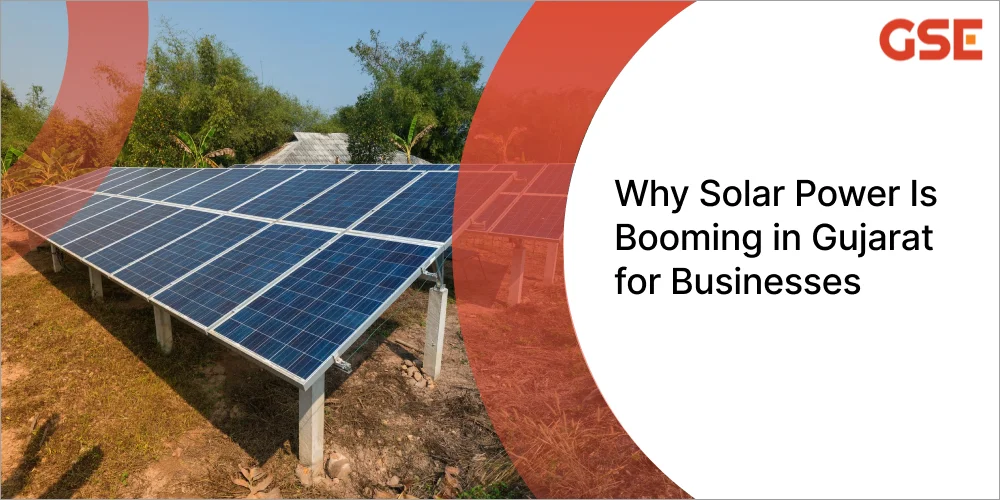
Over the last decade, Gujarat has become one of India’s most important hubs for solar power. From small ground captive projects to large factories, the growth of solar plants in Gujarat has been rapid and consistent. Strong sunlight, proactive policies and a robust industrial base have created ideal conditions for businesses to shift towards solar energy. For companies facing rising electricity costs and pressure to decarbonise, understanding how a solar plant in Gujarat works and where the opportunities lie has never been more important.
In this blog, you’ll explore:One of the first states in India to realise the power of solar was Gujarat. The daily sunny days come in most of the state. By using a solar plan,t they can easily generate electricity for their usage. Pilot projects were rapidly expanded into large solar parks and an ecosystem of rooftop solar power plants, captive projects and utility-scale plants. Solar power in Gujarat has become the centre of the renewable energy policy of the state today.
Solar power is a major part of clean energy. There are other sections, like wind and other resources, that are used to generate electricity. With the help of the Gujarat government and their rules to install solar plants has become easy. It will also help to increase the ratio of solar power use in India. This has not only contributed to the growth of power utilities. The consumers in the industry, commercial and institutional now have a clear roadmap to lock in clean electricity using their own solar energy plant in Gujarat and this will align cost reduction with sustainability objectives.
There are number of reasons that are responsible to make a gujarat as a rapidly growing solar capacity state. To begin with, the state has good solar irradiation and climate that facilitates high generation throughout the greater part of the year. This implies that each kilowatt of installed solar will provide additional units enhancing the viability of the project.
Second, the Gujarat solar policy and the larger policy of renewable energy in Gujarat has given it a sense of direction and clarity. Throughout the years, the state has been subsidizing solar parks, captive projects as well as more recently rooftop and distributed solar. This initiative helps to restore the old solar systems and, along with that, also shows that Gujarat need more solar plants.
Third, the industrial foundation and grid network of Gujarat is rather robust. The demand and good transmission infrastructure of the areas with energy-intensive industries facilitates the inclusion of new solar plants in Gujarat projects to the system. Active state authorities and a rather positive business climate also ease the situation.
All these factors contribute to the high rate of scaling of solar plants in Gujarat.
If we look at the data of the indian state for solar system usage, then Gujarat always comes at the top of this list.Since large parks have been created in special solar areas to smaller captive plants created by industries, the state has created a significant foundation of grid-connected solar projects. An average solar facility in Gujarat could be a small couple of hundred kilowatts to serve an individual factory, or multi-megawatts to serve a group of industrial facilities. In addition to these, utility-scale plants are located on large solar parks in areas such as Kutch and other areas with high irradiation, which supply power directly to the grid.
Instead of pursuing specific megawatts, what is important to businesses is the trend: the installations of solar energy plants in Gujarat have been increasing year after year. It implies more established projects, more competent contractors and a more developed ecosystem.
To firms interested in solar, this installed base is a comfort. Technology, approvals and integration issues have been tried severally and it is now easier to install new solar projects with realistically expected generation and performance.
Many industrial consumer include the electricity cost, and it will impact their business.Increased grid tariffs and fuel prices have forced numerous businesses to consider an industrial solar plant in Gujarat as a long term investment to stabilize and lower the energy costs.
Key reasons industries are switching include:Many factories and large facilities now look at captive solar in Gujarat as a strategic choice, not just a cost-cutting tool. Solutions such as rooftop systems combined with ground-mounted or open-access plants allow them to cover a large share of their demand.
For those seeking more detail on technical and commercial options, industrial solar panels in Gujarat from GSE Renewables provide a deeper look at plant sizing and configuration for different industries.
There are no businesses in Gujarat that don’t need electricity; that’s why it’s crucial to adopt solar plants for their business. They may select various types of installations to ensure an optimal saving based on the space available, load profile, as well as budget.
1) Rooftop Solar
Rooftop solar is often the first step for many businesses. Systems are mounted on RCC roofs or metal sheds of factories, warehouses, offices and institutions. Typical capacities range from a few tens of kilowatts to a few megawatts, depending on roof area. For many sites, solar rooftop installation in Gujarat offers a straightforward way to offset daytime loads without needing additional land.
2) Ground-Mounted Solar
Where land is available near the facility or within an industrial zone, ground-mounted plants offer scale and flexibility. These systems can be designed for higher capacities and expanded in phases, making them ideal for larger industrial consumers and parks. They are particularly attractive for long-term planning of an industrial solar plant in Gujarat.
In practice, many businesses combine rooftop and ground-mounted options, or even explore open access and group captive models, to reach a higher share of solar in their overall consumption.
The policy assistance has contributed significantly to the development of solar power in the state. Gujarat solar policy has taken different shapes and forms over the years, however, its main aim has been to promote utility and distributed solar on rooftops and open lands. The availability of clear guidelines on tariffs, banking and grid connectivity have assisted developers and the consumers to plan projects well.
In the case of smaller consumers, the Gujarat rooftop solar policy has introduced a rooftop adoption with the use of subsidies and net-metering to support the adoption. Although there can be some variations in the rules that apply to commercial and industrial users, the fact that there are established structures creates some assurance to larger investors.
On a larger scale, the policy of renewable energy in Gujarat describes the vision of the state to have a larger proportion of clean energy in its portfolio. For businesses, this means:The fact that companies thinking about having a solar plant in Gujarat continue to verify the most recent notifications and utility-level regulations does not imply the overall trend of solar investments is not positive as far as long-term ventures are concerned.
Even when the technical case is clear, the financial structure can decide whether a project moves forward. In Gujarat, commercial and industrial consumers typically adopt one of two main models for solar: CAPEX or OPEX/PPA. CAPEX Model In a CAPEX model, the business invests its own capital to build the solar plant and becomes the owner of the asset. This involves higher upfront spending but usually delivers the lowest long-term cost per unit.
Typical advantages:For many decision-makers, the cost of a solar plant in Gujarat under CAPEX is weighed against alternative investments and access to finance. OPEX / PPA Model Under an OPEX or power purchase agreement (PPA) model, a third party invests in and owns the plant, selling power to the consumer at an agreed per-unit price. This reduces or removes upfront capex and turns solar into an operating expense.
Benefits often include:For larger consumers with suitable load and connectivity, open access solar in Gujarat offers a route to source power from off-site plants under long-term PPAs, further expanding the range of financial options.
With many solar power plant brands in the market, choosing the right partner is as important as choosing the right technology.As a focused solar company in Gujarat, GSE Renewables works closely with industrial and commercial clients to turn ideas into operating plants that deliver real-world savings.
Instead of pushing one fixed model, the team looks at your load profile, space, tariff structure and growth plans before recommending a solution. This may involve a mix of rooftop, ground-mounted and open-access options, supported by clear financial analysis.
Reasons to choose GSE Renewables:For many organisations, this combination of technical depth and local understanding makes it easier to move from concept to a working solar plant in Gujarat.
Looking ahead, there are strong reasons to believe that Gujarat will remain at the forefront of India’s solar transformation. The state has land, sunlight, industrial demand and policies that all point in the same direction: more clean energy in the mix. As grids evolve and storage becomes more accessible, the value of well-located solar plant in Gujarat projects will only increase.
For businesses, the message is clear. Solar is no longer experimental—it is a mainstream, proven option. Companies that move early can lock in better sites, stronger partners and more favourable economics. Those who delay may find themselves paying more for the same energy.
Whether you are a factory owner, logistics operator, institution or park developer, now is a sensible time to explore solar projects with a trusted solar installer in Gujarat like GSE Renewables and understand how they fit into your long-term energy strategy.