Planning the Right Solar Farm Solution for Your Facility
Three questions arise at the beginning of a solar farm project – who will use the electricity generated, where will the plant be plugged into the grid and what kind of commercial entity will be the buyer? Businesses with a demand for offsite renewable power, participation in group captive programmes, third party supply or projects that are greater in size than those that their roofs or land can accommodate, are ideal for GSE Renewables to develop solar farm solutions in India.
The service combines site and grid feasibility, commercial structuring, engineering (E), procurement (P), construction (C), approvals and long term management (LTM). For those businesses looking for grid-tied renewable energy, check out open access solar, and if its within the property boundary, it should be in ground mounted solar.
Types of Solar Farms We Offer
Community Solar Farms
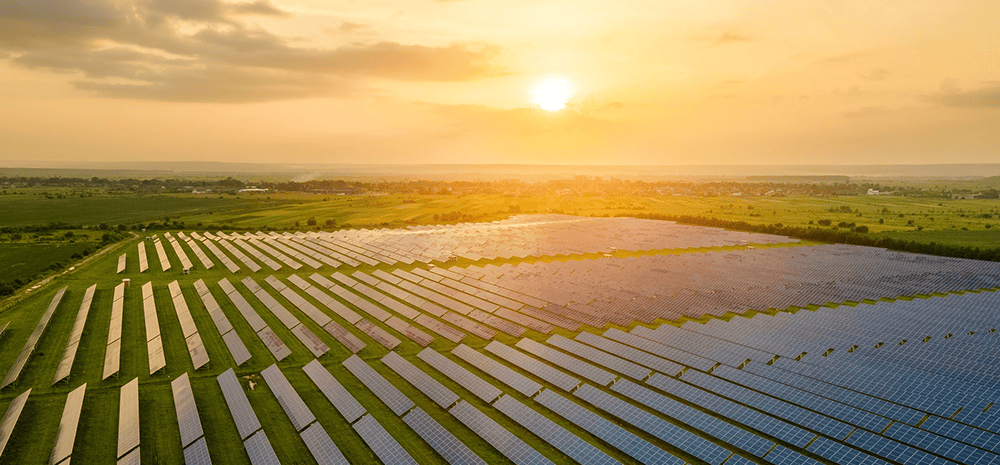
Community solar farms are smaller-scale solar farm installations developed to support local businesses and communities. These systems typically require 10–20 acres of land & can generate up to 5 MW of electricity. They allow users to benefit from solar energy without installing rooftop panels. Our solar farm solutions in this category are ideal for businesses or organizations with space constraints, offering clean energy access at a shared location.
Utility-Scale Solar Farms
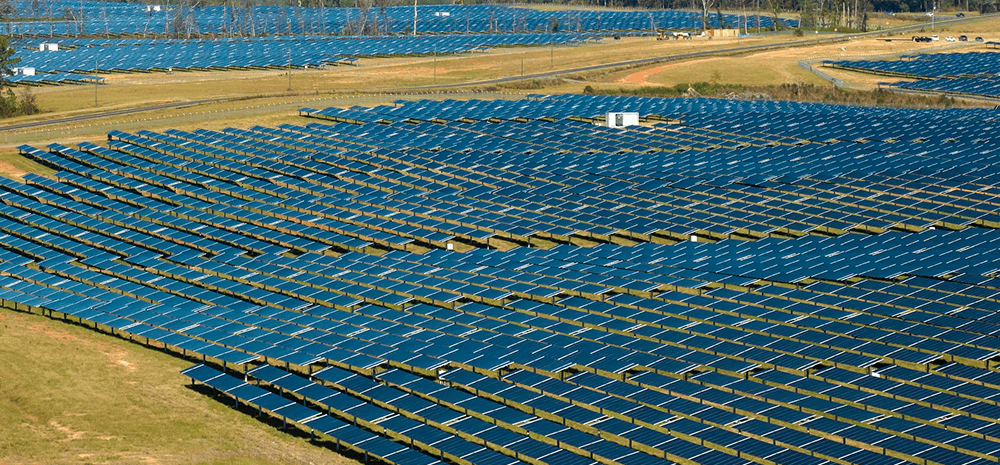
Utility-scale solar farms are large, industrial solar farm systems built to generate substantial power—up to 50 MW or more. Spanning hundreds or even thousands of acres, these solar farm installations feed energy directly to the grid, supplying power to public utilities that distribute it to residential and industrial users. GSE's solar farm solutions in this segment are key to supporting large-scale sustainability goals and meeting regional energy demands efficiently.
Choose the Right Solar Farm Business Model
| Model | Best Fit | Main Review |
|---|---|---|
| Captive | A single large consumer seeking ownership and control | Equity, consumption, grid and operations |
| Group captive | Several qualifying consumers sharing a project | Ownership and annual consumption compliance |
| Third-party PPA | Buyer seeking power without plant ownership | Tariff, term, credit, charges and scheduling |
| Investor-owned SPV | Capital providers seeking project exposure | Diligence, contracts, offtaker and operations |
Compare Solar Farm Models for Your Business
| Your Requirement | Recommended Model | Key Benefits |
|---|---|---|
| No upfront investment and lower electricity costs | Third-Party Open Access Solar Farm | Zero CAPEX, lower power tariffs, fixed PPA pricing for 20–25 years, and no maintenance responsibility. |
| Own a solar asset and maximize long-term savings | Captive Solar Farm | Full ownership, lower electricity costs, accelerated depreciation benefits, and exemption from applicable surcharges. |
| Share project investment with other businesses | Group Captive Solar Farm | Lower investment requirement, shared ownership, guaranteed savings, and professionally managed EPC and O&M. |
| Looking for predictable long-term renewable energy pricing | Third-Party Open Access Solar Farm | Long-term tariff certainty through a Power Purchase Agreement (PPA). |
| Large commercial or industrial power consumption | Captive or Group Captive Solar Farm | Ideal for businesses with high annual electricity demand seeking long-term energy security. |
How Does a Solar Farm Plant Work?
The solar farm is worked by the incoming sun lights up in the solar farm and it produces electricity from the sun's light. Thousands of solar panels can be installed on a large plot of land on a fixed-tilt or single-axis tracking structure, with the PV cells, usually semiconductor silicon, generating direct current (DC) electricity upon exposure to sunlight. The DC power is then converted to alternating current (AC) by a central or string inverter and stepped up via transformers and fed to the electricity grid or directly to commercial and industrial customers as Open Access, Captive or Group Captive arrangements. Advanced monitoring, SCADA systems and performance analytics, continuously monitor plant output to ensure maximum energy generation, operational efficiency and reliable, long-term performance.
Your Solar Farm Project Journey
Industries and Organisations We Serve
-
Manufacturing Plants
Factories and industrial facilities with available land and high daytime energy demand.
-
Food & Agro Industries
Food processing plants, agro-industrial parks, and cold-chain storage facilities.
-
Warehouses & Logistics Parks
Warehouses, logistics hubs, and distribution centres requiring large-scale solar power.
-
Educational & Healthcare Campuses
Educational institutions, hospitals, healthcare facilities, and institutional campuses.
-
Commercial & Business Parks
Commercial parks and multi-building campuses planning larger captive ground mounted solar plants.
Why GSE Renewables
15+ years of solar execution experience
End-to-end project management
Transparent CAPEX / OPEX guidance
Strong O&M and monitoring support
Frequently Asked Questions
It is an off-site or large solar project structured to supply renewable electricity to one or more commercial and industrial consumers through captive, group captive or third-party arrangements.
An on-site ground-mounted plant is usually within or close to the consumer facility. A solar farm is generally a larger development and may deliver electricity through the grid under open access or a PPA.
Land title, solar resource, topography, soil, access, grid capacity, evacuation route, substation distance, environmental constraints and the intended commercial model must be reviewed.
A group captive structure may allow several qualifying consumers to participate. Ownership, consumption, agreements and state regulations require legal and commercial review.
The operating scope can include O&M, performance monitoring, scheduling, billing support, insurance and warranty coordination. Responsibilities should be defined in the project agreements.
Not sure which solar farm model fits your business?
Talk to our team and we'll assess your energy needs, site options and commercial preference.
Get a Free Consultation