What Is a Solar Power Purchase Agreement (PPA)? A Simple Guide for Indian Businesses
Aug 24
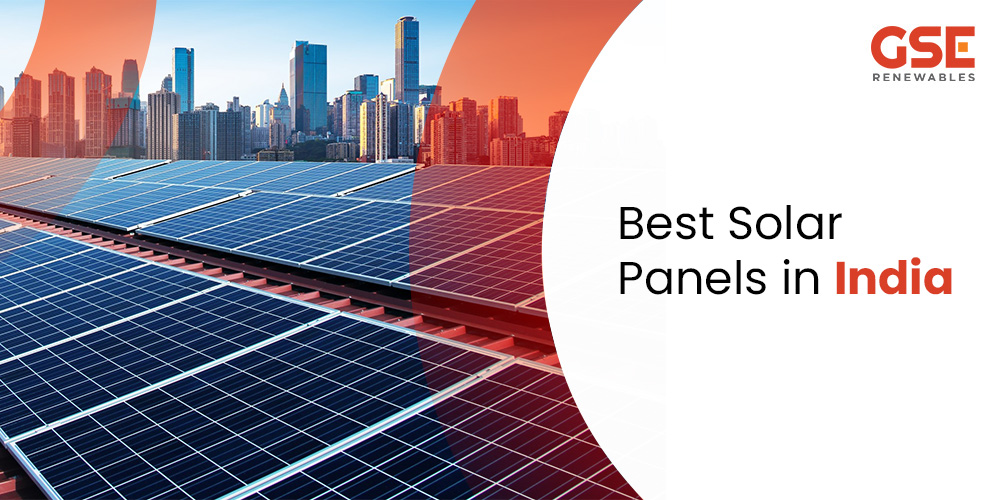
Solar power is a fast-growing source of energy to the ever-growing power demand of the world. By April-May 2025, India will have approximately installed 108-111 GW of the total solar capacity and rooftop solar of around 18-19 GW, as per MNRE. Solar energy is considered one of the affordable sources of electricity, due to a reduction in the price of the panels, the support of the policy and the technological advancement that is constantly taking place. In the case of businesses, the transition puts one important thing into focus, and it is to ensure that investments in solar pay off. Regardless of whether the target is to lower the energy bills, enhance sustainability or have the independence of energy, it is necessary to pick the best solar panels for commercial use. Having several different types of panels, each offering its own benefits and drawbacks & can have a significant impact on the cost and energy output in the long term. Choosing solar panels for commercial property can be challenging without understanding their features & limitations. Each panel type offers unique benefits, from high-efficiency monocrystalline modules to cost-effective polycrystalline options. Knowing this difference will help companies to choose a system that best fits their energy requirements, site conditions & budget.
This blog focuses on a practical overview of installing solar panels on commercial buildings. It assists you in determining which system is going to be most valuable and productive to your business. If your organization wants to install commercial solar panels, consider collaborating with GSE Renewables, which is among the reliable solar companies in India and offers customized and high-efficiency solar solutions for large-scale business operations.
Our commercial solar energy power plants offer better power output to facilitate sustainability and long-term cost savings. They come with extensive warranties & thorough performance testing to ensure reliable, long-lasting solar power plant installations, whether it’s a 1 MW rooftop system or a 5 MW ground-mounted project.
The number of solar panel installations in India is actively rising due to the use of sunlight and the rising trend of clean energy usage. The initial phase of a long-term energy independence and significant cost reduction is the selection of appropriate solar panels for commercial buildings. Nonetheless, when there is a variety of brands and technologies, it is understandable that selecting the most efficient solar panels for commercial property can be a challenging for any organization.
1. Tata Solar 160 MW Monocrystalline PV Module :
Tata Solar stands as a respected solar company in India that frequently achieves top rankings among national solar panel providers. The 160 MW monocrystalline modules from Tata Solar deliver high performance in low-light conditions thus making them suitable for small rooftop areas.
Specifications
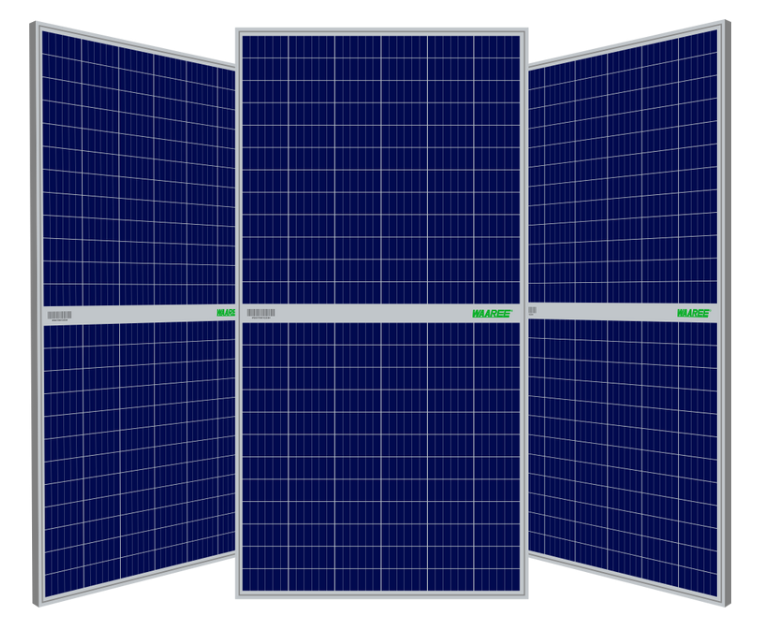
2. Waaree Aditya Series (WSD-325 to WSD-350) :
Waaree Solar, a top contender for the best solar panels in India, offers the Aditya Series with advanced cell technology. You can use these solar panels in hot or cold weather since they maintain stable performance no matter what season it is.
Specifications
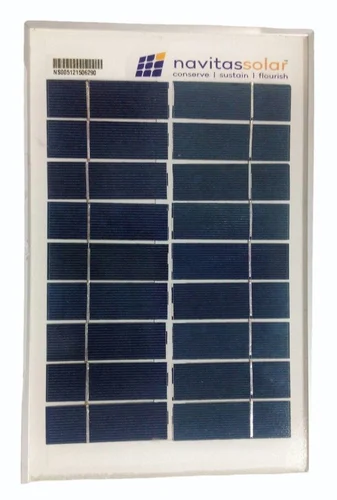
3. Navitas Green Anora Series:
Aesthetics meet functionality with Navitas Green’s Anora series. Available in a sleek black design, these panels blend seamlessly into your rooftop, generating exceptional power with their 72-cell configuration.
Specifications of the Navitas Green Anora Series:
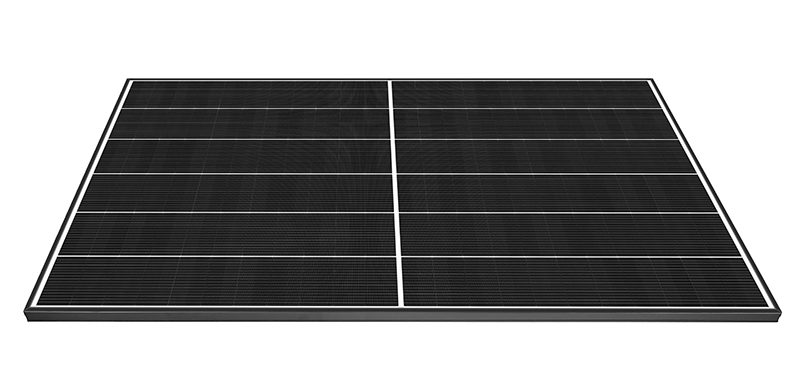
4. Panasonic EverVolt H series 410W: Panasonic EverVolt represents the top choice for large-scale rooftop solar power systems. The high wattage and small size profile of this product makes it suitable for installations that require substantial power output at tight locations.
Specifications:
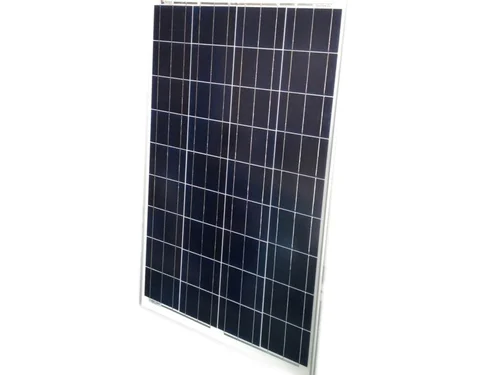
5. Spark Solar – Polycrystalline Panels :
Spark Solar stands out as a cost-effective solar panel solution that provides residential users with top-quality solar power solutions in India. The company focuses on building products that deliver both quality performance and extended product lifespan.
Specifications:
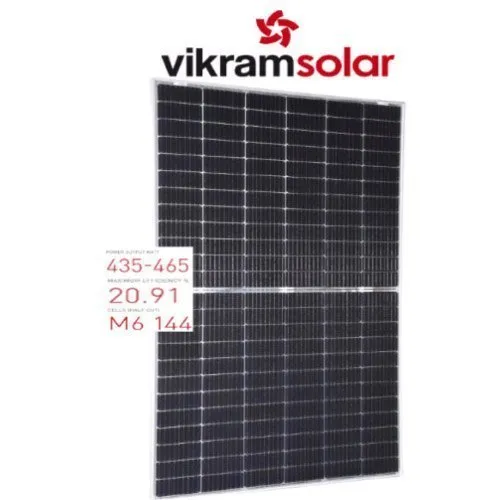
6. Vikram Solar ELDORA Series
The Indian solar market trusts Vikram Solar as one of its top solar panel providers because they deliver dependable polycrystalline modules at competitive prices. These solar panels are specifically designed for new solar market participants who own homes.
Specifications:
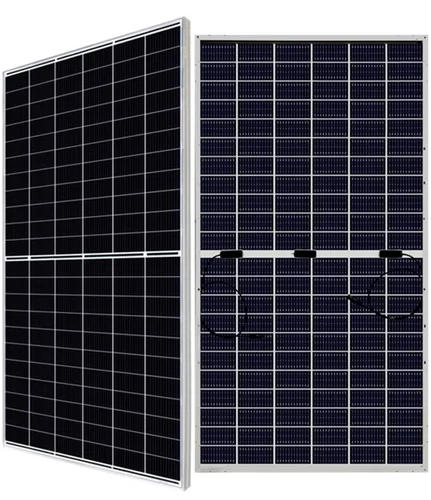
7. Adani Solar Encore series multi-crystalline P-Type: The Adani Solar Encore series multi-crystalline P-Type delivers affordable durability which makes it suitable for off-grid applications. The panels remain operational during tough weather conditions because of their sturdy physical elements.
Specification of Adani Solar Encore series multi-crystalline P-Type:
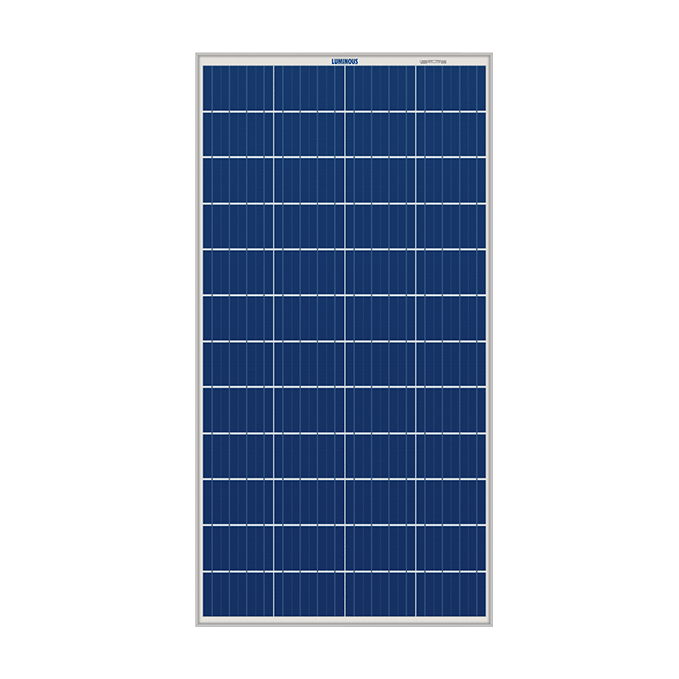
8. Luminous Solar – Polycrystalline Panels
The Indian market recognizes Luminous as one of its leading solar panel providers which delivers comprehensive solar solutions. The company produces polycrystalline panels suitable for residential use and provides inverters and solar accessories as additional options.
Specification :
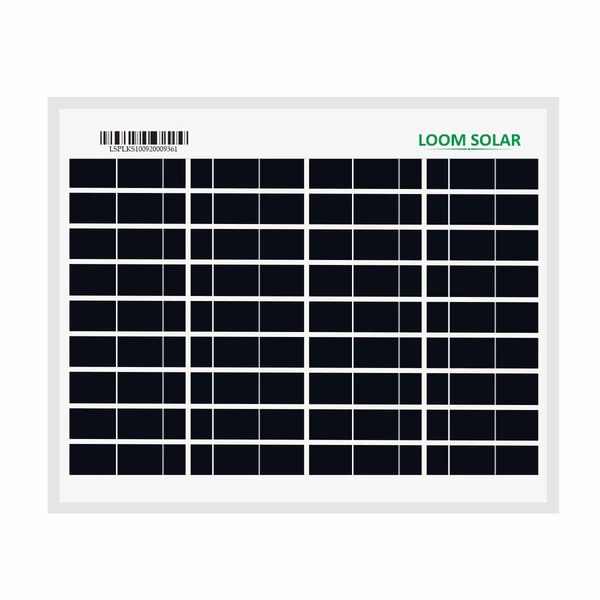
9. Loom Solar – Monocrystalline Panels
India has witnessed Loom Solar transform into one of its fastest-growing solar startup ventures. The monocrystalline panels from this company deliver outstanding performance which makes them recognized as top rooftop solar power panels.
Specification :
Specifications of Microtek Solar- Multi crystalline solar panels:
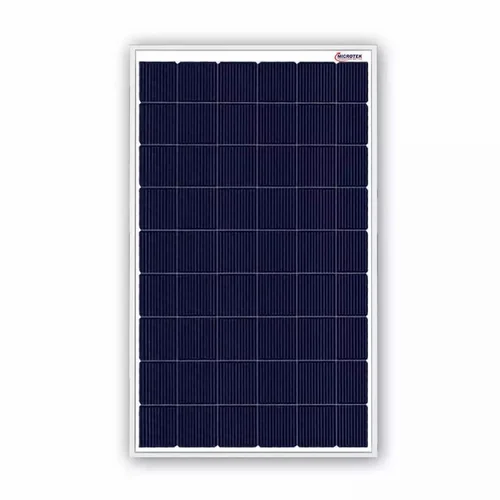
With the trend across businesses and industries towards clean energy, it is time to select the appropriate solar panel system that will maximise ROI, lower operation expenses & ensure energy independence in the long-term. Whether installing solar on commercial buildings, it is important to understand that various types of solar panels exist and to determine the best one to install to ensure efficient performance and long term savings. Below is an overview of the types of solar panels for commercial buildings, ideal for large-scale solar power systems for businesses in India.
The summary of the kinds of solar panels to be used on commercial buildings is outlined below, which are suited to large-scale solar power systems for businesses in India.
1. TOPCon Solar Panels
TOPCon (Tunnel Oxide Passivated Contact) panels represent the latest advancement in solar technology. Designed for businesses such as large corporate rooftops, industrial plants & open access solar seeking superior efficiency & long-term energy savings, TOPCon panels offer:
2. Mono-PERC Solar Panels
Mono PERC (Passivated Emitter and Rear Cell) solar panels enhance the performance of standard monocrystalline panels by adding a rear-side passivation layer to improve light absorption. They offer:
3. Monocrystalline Solar Panels
Monocrystalline panels are best choice for industrial & commercial projects like high-rise buildings, commercial offices & logistics hubs. Known for their uniform black appearance & high-purity silicon cells, they offer:
4. Polycrystalline Solar Panels
Made by melting multiple silicon crystals, polycrystalline panels are affordable and well-suited for projects such as warehouses, factories & schools with large rooftop or ground space where space is not a constraint. They offer:
5. Thin-Film Solar Panels
These ultra-light panels are ideal for unconventional rooftops or structures with weight restrictions like Commercial sheds, transit stations, and specialty industrial roofs . Though they have lower efficiency, they work well in diffused light.
6. Bifacial Solar Panels
Bifacial panels capture sunlight from both sides, boosting total energy output especially when installed on highly reflective surfaces like concrete or white gravel for open access solar, elevated industrial rooftops, and large commercial projects.
Ideal for ground-mounted or elevated rooftop systems
| Solar Panel Type | Cost | Efficiency | Appearance | Advantages | Disadvantages |
|---|---|---|---|---|---|
| N-Type TOPCon Bifacial | Slightly higher than mono-PERC | 27% to 30% | Black colour with rounded edges | High power output and high space efficiency | High cost |
| Mono-PERC Bifacial | Medium | 24% to 28% | Black colour with rounded edges | High power output and high space efficiency | High cost |
| Mono-PERC Monofacial | Medium | 20% to 22% | Black colour with rounded edges | High power output and high space efficiency | High cost |
| Monocrystalline | Medium | 15% to 24% | Black colour with rounded edges | High power output, longevity, low temperature coefficient | Higher cost than polycrystalline |
| Polycrystalline | Lowest | 13% to 16% | Blue colour, no rounded edges | Highly affordable | Lower power output, high-temperature coefficient |
| Thin-Film Solar Panel | N/A | 6% to 18% | Sleek blue or black | Highly flexible, usable on many surfaces | Low efficiency and short lifespan |
The choice of solar panels for commercial use is essential in order to ensure optimality in energy production, ROI and savings in the long term. Investing in commercial use solar panels, this consideration might be taken as follows:
The installation process of solar power for commercial buildings involves several major steps that can be undertaken to facilitate the process in a manner that is smooth and meets the required standards:
Site Survey and Audit: The building is inspected by experts to determine the feasibility and energy potential.
System Design: It is a customized setup, which is developed depending on the size of the roof, tilt and energy needs.
Permitting and Compliance: Any legal approvals, safety standards and net metering applications are handled.
Installation: Panels are attached, wired and hooked together, usually in days/weeks, depending on the scale of the system installed.
Testing and Commissioning: The last checks are done by engineers to verify system efficiency and safety.
Although the initial investment in solar panels for commercial buildings required upfront fees, the returns on the investment is great in the long run:
This depends on your energy consumption and available space. Typical commercial installations range from 150 kW to 1 MW, while industrial units may go up to 5 MW or more. GSE conducts a site assessment to recommend the optimal capacity.
Yes, rooftop solar systems are especially with high-efficiency panels & professional installation. They reduce grid dependency offer long-term cost savings & work efficiently with net metering systems.
Yes, solar panels can be installed on shingle, metal & flat commercial roofs using the appropriate mounting systems like clamps or ballast structures. GSE customizes installations based on your roof type and structure.
Minimal maintenance is needed. Regular cleaning and occasional inspection ensure peak performance. GSE also offers comprehensive AMC and O&M services for hassle free upkeep.
Subsidies are primarily targeted at residential systems. However, businesses may benefit from accelerated depreciation, tax incentives & open access policies, depending on the state and project scale.
The average investment payback (ROI) of a solar panel installation in a business building in India takes 3-5 years. The specific payback period will recede on a number of factors including:
Our Blogs With a combined experience of over 250 years and the successful management of 30 MW of solar energy projects, GSER offers the most efficient solutions. What Is a Solar Power Purchase Agreement (PPA)? A Simple Guide for Indian Businesses If you’ve sat through...
Read MoreOur Blogs With a combined experience of over 250 years and the successful management of 30 MW of solar energy projects, GSER offers the most efficient solutions. Group Captive Solar: The 26/51 Rule for Industrial Buyers Group captive solar enables two or more industrial consumers...
Read MoreOur Blogs With a combined experience of over 250 years and the successful management of 30 MW of solar energy projects, GSER offers the most efficient solutions. 1 kW Solar Panel Price, Units Per Day and Subsidy in India 2026 In 2026, Indian homes are...
Read More