What Is a Solar Power Purchase Agreement (PPA)? A Simple Guide for Indian Businesses
Aug 24
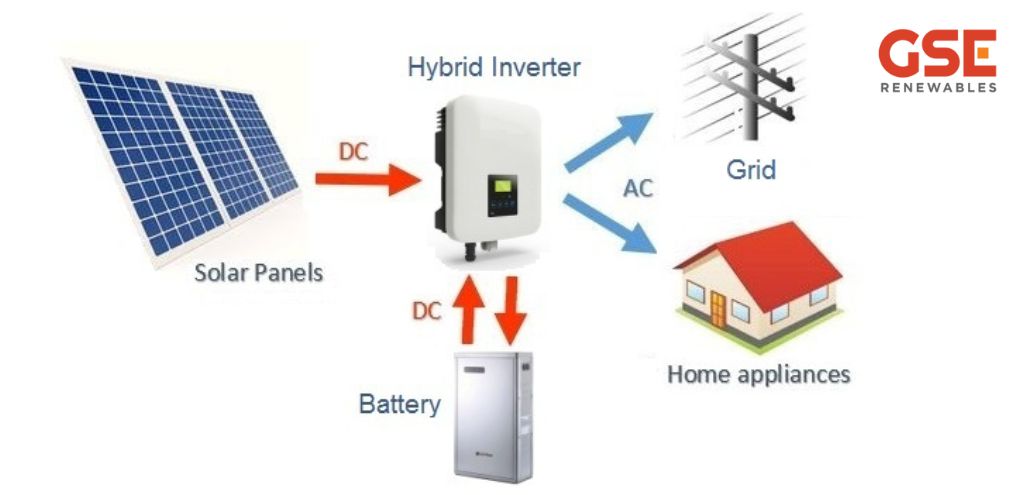
Hybrid solar systems can capture usable electricity through the involvement of hybrid solar inverters and batteries and this can be stored to be used later. These systems work in the same way as the conventional grid-tied solar systems with the additional advantage of being able to store energy, serving as a fall-back power supply when the grid becomes unavailable.
The appeal of having a hybrid solar system is that they will provide continuous electricity to the home even with the power outage in the grid. Get more information on the components, and cost of hybrid solar, as well as various forms of this system.
There are three types of solar power systems which include on-grid, off-grid, and hybrid inverters. A hybrid solar system has the advantages of both on-grid and off-grid systems and minimizes the drawbacks of each. It is linked to the grid by net metering, but has a battery backup to save power generated by the sun. The solar energy that is gathered by the hybrid solar panel is forwarded to a best hybrid solar inverter to generate electricity.
The greatest advantage of a hybrid solar power system is the backup power supply, which guarantees the power supply even in times of power outages. The battery backup is used to store surplus energy produced during the peak hours.
It is important to note that:
A hybrid solar system comprises four essential elements:
Solar Panel: These panels convert solar energy into DC electricity and are a cornerstone of the solar system.
Hybrid Inverter: This critical component regulates voltage and converts DC to AC, which powers household appliances.
DCDB (Direct Current Delivery Box): The DCDB contains a fuse, SPD, and MCB for safety and connects multiple solar panel wires into a string with positive and negative outputs.
Charging Controller: The charging controller enhances battery life by controlling the amount of power entering the battery.
The most cost-effective hybrid solar systems employ a basic inverter, which includes a hybrid solar inverter and charger. It also incorporates smart controls for efficient electricity utilization. Hybrid solar power inverters are classified into four types:
Basic Hybrid Solar Inverter: This common type allows solar energy storage in a battery but may not reliably supply power during outages as it is not connected to the grid.
Multimode Hybrid Solar Inverter: An advanced inverter with a built-in backup or a separate unit, enabling battery charging and usage during power cuts.
All-in-one Battery Energy Storage System (BESS): This new hybrid solar inverter includes both batteries and the inverter, easily adaptable to existing solar systems.
Advanced AC Coupled System: These systems employ deye hybrid inverter for battery charging and are simple to use for powering AC loads, though slightly less efficient than DC-coupled systems. Efficiency can be improved by using multiple hybrid solar inverters.
A hybrid solar system offers reliability by ensuring constant electricity supply:
While hybrid solar systems are more expensive than typical on-grid and off-grid systems, they save money on electricity bills and provide continuous power. In India, a 1kw hybrid solar system, 5kw hybrid solar system, 10kw hybrid solar system price may cost around Rs. 1,00,000, while a 20kW system can reach Rs. 15,00,000. Prices vary based on quality, manufacturers, availability, and other factors, so exact costs differ between sellers, models, and installers.
Solar Diesel Hybrid System: Combining photovoltaics and diesel gensets, this system stores energy for on-demand use, ensuring continuous power supply even during grid failures.
Solar PV Wind Hybrid System: While relying on wind as the primary energy source, this system may require additional energy sources for consistent power generation.
Solar Thermal Hybrid Systems: These systems generate power and provide heating, boasting a lifespan of around 20 to 25 years and high efficiency compared to conventional systems.
Choosing the right solar inverter type is one of the most critical decisions for any home, shop, factory, or commercial rooftop installation. Whether you are evaluating a hybrid solar inverter in India for the first time or comparing your options before a large-scale deployment, understanding the practical differences between on-grid, off-grid, and hybrid systems will directly impact your return on investment.
If you want a deeper look at how on-grid and off-grid systems compare in detail, our dedicated guide on on-grid and off-grid solar power systemscovers each system comprehensively.
The table below offers a clear, side-by-side comparison across the most important decision factors:
| Feature | On-Grid Inverter | Off-Grid Inverter | Hybrid Solar Inverter |
| Battery Required | Not Required | Required | Required (Recommended) |
| Backup During Grid Outage | Not Available | Available | Available |
| Net Metering Compatible | Yes | No | Yes |
| Upfront Cost | Lowest | High | Medium to High |
| Maintenance Requirement | Low | High | Medium |
| Ideal for Homes | Stable Grid Areas | Remote Locations | Areas with Grid Cuts |
| Ideal for Factories/Shops | Low-load Units | Remote Facilities | Best Fit |
| CAPEX or OPEX Model | Both | CAPEX Only | Both |
An on-grid solar inverter does not need a battery. It feeds surplus energy directly into the utility grid and draws power when solar generation dips. An off-grid inverter, however, is entirely dependent on a battery bank for storage because it has no grid connection. A hybrid solar inverter with battery gives you the best of both: it stores excess power for self-use while staying connected to the grid for net metering benefits.
This is where the hybrid system stands apart. During a grid outage, a standard on-grid system shuts down completely for safety reasons, leaving your operations halted. An off-grid or rooftop solar hybrid inverter seamlessly switches to battery backup, keeping critical loads running. For factories, warehouses, and commercial premises where downtime is costly, this uninterrupted supply is a decisive advantage.
Both on-grid and hybrid systems support net metering. Excess electricity generated during peak sunlight hours is exported to the grid, and you earn credits against your electricity bill. Off-grid systems cannot participate in net metering because they operate independently of the utility grid. For commercial and industrial users looking to offset high grid tariffs, the net metering capability of a hybrid inverter for commercial use makes it a financially sound choice.
On-grid systems carry the lowest upfront cost because they do not require battery banks. Off-grid systems are the most capital-intensive due to large battery requirements. Hybrid systems fall in between. For businesses evaluating investment, both a capex solar model (outright purchase) and a solar opex model rooftop solar (where a developer like GSE Renewables installs and maintains the system at zero upfront cost in exchange for a per-unit energy charge) are available for hybrid installations.
To understand how much a solar installation may cost for your premises, explore our detailed breakdown of solar panel installation cost in India. For larger industrial or commercial setups, our guide on 100 kW solar panel price in India will give you a realistic cost benchmark.
On-grid systems are the easiest to maintain because they have fewer components. Off-grid systems demand regular battery inspection, water top-ups for flooded lead-acid batteries, and capacity checks. A hybrid system requires moderate maintenance, primarily focused on the battery bank. Modern lithium-based hybrid batteries reduce this significantly, making a hybrid inverter for factory environments practical without heavy operational overhead.
Homes and Residential Buildings: A hybrid solar inverter with battery is ideal for households in areas where grid outages are frequent. It provides backup power while also allowing net metering to reduce monthly electricity bills.
Shops and Small Commercial Premises: Retail outlets, clinics, and offices benefit from a hybrid system because daytime solar generation covers most loads, the battery handles evening demand, and net metering credits offset remaining bills.
Factories and Industrial Facilities: A hybrid inverter for factory use is particularly valuable in manufacturing environments where power interruptions disrupt production. Hybrid systems provide both cost savings through solar generation and reliability through battery backup. GSE Renewables specialises in industrial rooftop solar solutions tailored to high-load factory environments.
Commercial Rooftops: Large commercial buildings, IT parks, logistics hubs, and institutional campuses are well-suited to a rooftop solar hybrid inverter setup. The combination of net metering, battery storage, and grid connectivity ensures maximum savings and zero downtime. GSE Renewables designs and deploys end-to-end commercial rooftop solar systems across India under both capex and opex models.
If your premises has a reliable grid connection and no backup requirement, an on-grid system is the most cost-efficient entry point. If your location has no grid access, an off-grid system is the only practical option. For the vast majority of commercial, industrial, and residential users in India who face frequent outages and high grid tariffs, a hybrid solar inverter in India delivers the strongest combination of savings, reliability, and future-readiness.
GSE Renewables helps businesses across India design the right solar system for their specific load profile, location, and financial model. Whether you prefer a capex solar model or a zero-investment solar opex model rooftop solar arrangement, our team will guide you to the most suitable and cost-effective solution. Get in touch with our solar experts today.
Because of its renewable nature, solar energy is expected to expand in popularity over the next decade. Understanding the benefits of various solar systems is critical for making educated judgments. Hybrid systems save money while also providing the crucial feature of battery backup for continuous power delivery.
Our Blogs With a combined experience of over 250 years and the successful management of 30 MW of solar energy projects, GSER offers the most efficient solutions. What Is a Solar Power Purchase Agreement (PPA)? A Simple Guide for Indian Businesses If you’ve sat through...
Read MoreOur Blogs With a combined experience of over 250 years and the successful management of 30 MW of solar energy projects, GSER offers the most efficient solutions. Group Captive Solar: The 26/51 Rule for Industrial Buyers Group captive solar enables two or more industrial consumers...
Read MoreOur Blogs With a combined experience of over 250 years and the successful management of 30 MW of solar energy projects, GSER offers the most efficient solutions. 1 kW Solar Panel Price, Units Per Day and Subsidy in India 2026 In 2026, Indian homes are...
Read More